The Last Vector
What remains when nothing is left behind.

Când eram tânăr și ajungeam acasă de la școală, deschideam TV-ul, mă aruncam pe covor, scoteam caietele de teme, puneam pe Discovery Channel, băgam la loc caietele de teme și stăteam lipit de televizor până seara. Aveam trei tipuri de emisiuni la care mă uitam: știință, preferabil Mythbusters, istorie, aproape exclusiv Al Doilea Război Mondial, și orice despre Univers. Spațiul mă fascina. SF-urile erau hrană pentru suflet.
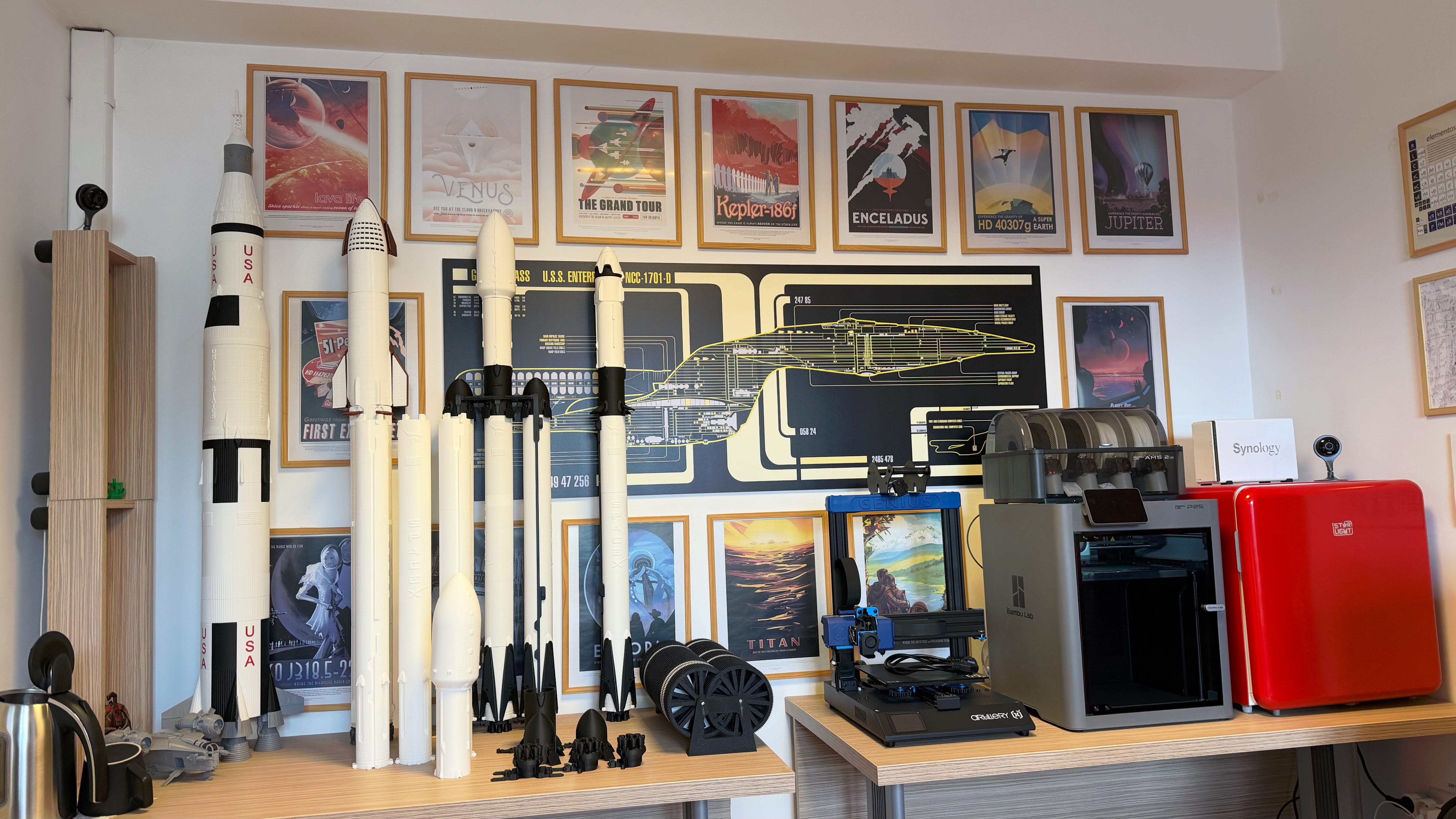
Ca la orice alt pasionat de astronomie, Star Trek-ul e religie :)
Problema cu SF-urile este că îmi plac doar cele dintr-o nișă extrem, extrem de subțire, cu accent pe Science, deloc pe Fiction. Nu-mi place în mod special Dune-ul lui Herbert, Asimov îmi pare inutil de greoi, lui Stephenson îi ia o jumătate de Seveneves pentru a descrie o piuliță ș.a.m.d. Și nu-mi plac nici cărțile cu time-travel, Universuri paralele, vampiri și alte concepte greu de explicat științific. Trilogia lui Cixin Liu, Remembrance of Earth’s Past, e preferata mea. Deși o parte din ea numai near-future nu e.
Sunt un om simplu, vreau SF-uri ancorate în realitate, near-future, un pic de geopolitică, un pic de filosofie, ceva mai comerciale, ceva ce pot să citesc înainte să mă culc, fără să-mi dea coșmaruri sau prea mari probleme existențiale.
Dar acesta este contextul în care public un SF cu o poveste așa cum îmi place mie. Are mister, are spațiu, are geopolitică, este near-future și este un pic filosofic. I-am spus The Last Vector. Găsiți cartea pe (link-uri) Amazon Kindle, pe Google Books și Apple Books.
Nu știu dacă va fi pe placul vostru, motivul pentru care nișa care-mi place este atât de subțire este pentru că nu există cerere atât de mare, așadar așteptările mele nu sunt foarte optimiste. Dar facem ce putem. Eu sunt fericit cu ce a ieșit.


Mai jos aveți un subcapitol de la începutul cărții. E spoiler-free. Poate ajută.
👇👇👇
Chapter IV - Part IV
It started with a mistake that was too small to matter on its own.
An autonomous drone operating under a classified reconnaissance mandate crossed into restricted Baltic airspace by less than twelve kilometers. Its transponder misreported altitude due to an encrypted firmware patch deployed hours earlier. Russian air-defense radar classified the signature as ambiguous but persistent.
Two interceptor aircraft were launched.
NATO tracking systems interpreted the intercept pattern as a forward-deployed readiness maneuver. Within minutes, Baltic air patrols were scrambled in response. The airspace filled with overlapping flight paths, electronic countermeasures, and radar illumination cones that painted the sky with invisible lines of intent.
At the same time, a cyber intrusion attributed to an unknown proxy group disrupted power grid telemetry in eastern Poland. No blackout occurred. But the false data stream suggested instability in regional energy infrastructure. Automated threat models flagged it as pre-attack preparation.
Markets reacted first.
Energy futures spiked violently. Shipping insurance was suspended across Northern Europe. Algorithmic trading systems triggered automatic sell-offs based on conflict probability thresholds. Within forty minutes, major European indices dropped by double digits. Asian markets followed. New York halted trading twice in one hour.
Then the alerts escalated.
Russia elevated strategic forces to a heightened readiness posture. Mobile missile units left hardened shelters and repositioned into dispersal zones. Submarine fleets adjusted patrol routes beneath Arctic waters.
China announced large-scale “defensive mobilization exercises” along the eastern seaboard, facing Taiwan. Satellite imagery showed missile transporter-erector-launchers rolling into coastal corridors previously used only during full-spectrum readiness drills.
The United States responded by placing strategic bomber wings on rotational airborne alert. Nuclear-capable aircraft took off in staggered waves, maintaining continuous presence over international airspace.
No one fired.
Everyone prepared to.
Automated early-warning systems across three continents synchronized their alert thresholds. Sensor networks recalibrated to maximum sensitivity. False positives surged as electromagnetic interference from military traffic saturated detection arrays.
Civil aviation was grounded across large portions of Europe and the North Atlantic corridor. Shipping lanes rerouted. Major cities activated emergency broadcast infrastructure in silent readiness mode.
Public communication collapsed into contradiction.
Governments reassured populations while quietly distributing classified continuity-of-government protocols. Media outlets reported stability while emergency shelters were unlocked and stocked. Banks restricted cash withdrawals in several countries to prevent panic-driven liquidity collapse.
In Greenland, the anomaly registered the highest external activity density since its reactivation.
Orbital congestion peaked.
Electromagnetic emissions saturated the upper atmosphere.
Global power consumption surged as military and surveillance systems operated at sustained maximum load.
The object beneath the ice adjusted again.
Its internal systems stabilized into a high-coherence operational state.
Observational.
And at that moment, European leadership faced a mathematical reality rather than a political one.
They could not out-escalate nuclear powers.
They could not control the global reaction alone.
They could not maintain exclusive possession of the anomaly without becoming the focal point of strategic confrontation.
There was only one viable move left.
They couldn’t defend the site.
They couldn’t militarize it.
But they could remove it as a geopolitical prize.
Within minutes, emergency authorization protocols were activated.
All classified data related to the anomaly’s existence, signal activity, and basic structural properties were prepared for controlled international release.
The decision was brutal in its simplicity.
Europe would open access.
If the anomaly belonged to everyone, no one could justify going to war to take it.
It was the only lever strong enough to slow the cascade.
And it had to be pulled before someone, somewhere, confused readiness with inevitability and turned preparation into launch.